
A composition for solo piano by Felicity Mazur-Park
Developed through the 2025 Summer Composing Mentorship
Mentored by Soheil Shirangi
Piano:Qin Lan Zhang
Published by Zang Records in September 2026
Athenian playwright Euripides wrote the tragedy The Bacchae in 405 BCE. In the play, Dionysus, Greek god of wine-making, orchards and fruit, vegetation, fertility, festivity, insanity, ritual madness, religious ecstasy, and theatre, punishes King Pentheus of Thebes, his cousin, and Pentheus’ mother Agave for not embracing his cult. Dionysus drives the women of the city, including his aunts, mad and they assimilate into his cult, The Bacchae. Pentheus reacts by banning Dionysian worship in Thebes and, as a result, Dionysus drives Pentheus’ mother, Agave, and the other Bacchae to tear Pentheus apart limb by limb and kill him. Agave presents the head of her son, which she believes to be that of a mountain lion, to her father Cadmus who is horrified by the sight. In my piano piece, divided into five movements, I depict Euripides’ play. I use contrasting piano textures to portray key scenes from the story and the godly presence of Dionysus. The pianist begins by playing a heroic theme in fugato style counterpoint. The introduction of an ominous bass line in the middle section of the first movement foreshadows the horror to come. The ecstasy and violence of the Bacchae is portrayed by virtuosic textures first introduced in the second movement. These textures increase in tempo at each reoccurrence in correspondence with the escalating drama. Each key event in the story is noted on the score for the pianist who is tasked with realizing the music at the same time as portraying the story.
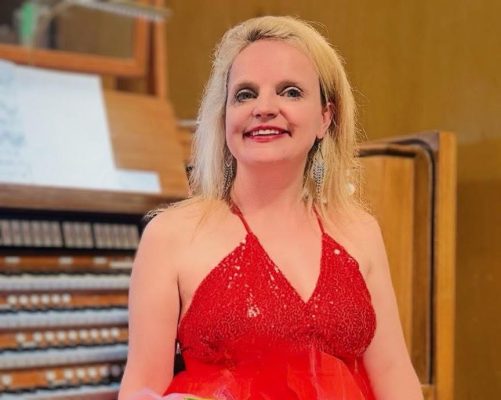
Dr. Felicity Mazur-Park is a British-American composer, organist, and pianist whose career encompasses performance, composition, scholarship, and advocacy for women in classical music. She holds a Doctor of Musical Arts in Composition from Texas Christian University and is completing a PhD in Visual and Performing Arts at the University of Texas at Dallas.
Her distinctions include the American Guild of Organists Student Commissioning Project Award (2024) and the Sherry Clarkson Prize (2023). Her compositions have been featured at the Alba Music Festival in Italy and performed throughout the United States.
Mazur-Park’s creative work explores the intersection of historical traditions, contemporary musical expression, and feminist advocacy. Her doctoral composition, Feminist Advocacy Through the Liturgy: A Liturgical Organ Concerto, draws inspiration from women composers across several centuries, reimagining the organ concerto as a vehicle for artistic representation and innovation. Her theatrical works include the opera The Seagull, while her interdisciplinary PhD dissertation, A Feminist Retelling of Shakespeare’s Antony and Cleopatra Through Music and Essay, examines gender, power, and historical representation through music and dramatic narrative.
Currently serving as Music Minister and Organist at the Episcopal Church of the Annunciation in Lewisville, Texas, Mazur-Park maintains an active career dedicated to performance, composition, education, and expanding the classical repertoire.